



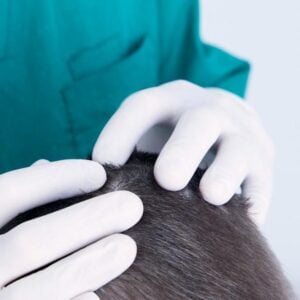


As you may know, the intervention of hair transplants can be a delicate and precise operation, however, it has a high success rate, and many of our patients have been satisfied with their results. As with any other surgery, the recovery period is very important for hair transplantation. Many patients may wonder how long it will take to heal after the surgery. In this blog post we will explain this in detail to make it easier for you to know what to expect.

Results And Expectations After Hair Transplantation
Before answering the question of how long the recovery period will last, it is good to know how the process takes place. The donor area is chosen and the clean area is specified by the surgeon during the first consultation. Grafts are extracted from the donor area, processed and then implanted in the desired location, with the surrounding hair growing in the same direction. One of the most important aspects of this effective technique for creating a natural look is the direction and angle of implementation of the hair follicles.
The important hair transplant procedure will be followed by a series of recommendations depending on the density of the transplants. To achieve optimal results and recover as soon as possible, these recommendations are a must. During the first few days, hair should not come into contact with water. However, the day after contact with clinic staff, you can wash as directed and use the recommended shampoo. While the healing process takes 8 to 10 weeks, the recovery period lasts about 10 days. After surgery, it takes a year to 10 months before the final effects are evident, so patience is necessary.
How Many Sessions Are Needed?
Knowing the number of sessions that are needed is very important because this is a huge factor when it comes to answering the question of how long will the recovery period take. Even though most of the time it will just be only one session needed to see the full results in some cases there may be a second session. This will be needed in some cases for example when the patient's hair structure may need more grafts or may be more difficult to work with. If this is the case the doctor should discuss this with the patient and see if he is right about having two sessions done.

Which Hair Types Can Get The Desired Outcome From Hair Transplantation?
Hair transplant results will be better if the roots in the donor areas (beard, neck, chest, back, legs, and arms) support the bald area at the appropriate level. In this case, the ability of the donor areas to provide enough hair follicles is more important than the size of the bald area.
The Process After Hair Transplant
The hair transplantation process involves transplanting follicles rather than hair strands. The skin graft fragments come off after a week and a half, while the hair strands suddenly begin to fall out as cut hair three or four weeks later. The goal is to transfer the follicles that produce the hair fiber. The patient must be informed of these aspects before the procedure. A patient who knows the steps of the procedure will not be anxious or scared during the procedure. As we have already mentioned, you need to be patient during the recovery period, because it may take some time for the hair to grow properly, and after 3 months you will begin to get a clear picture of what the full results will look like.
The expansion of a strand of hair is 0.05 cm per day, 0.5 cm per day, and 1.5 cm per month. Therefore, it can take up to eight, ten or even one year to observe the effects of hair transplantation. In this operation, redness can be considered a crucial component of the surgery and the subsequent wound healing process. On nonsensitive skin, redness disappears quickly. To prevent the swelling from lasting too long, UV protection is necessary.
Utilizing a variety of topical medications that improve scalp blood flow is helpful. In everyday practical applications, it has also been noted that consuming B vitamins, zinc, and biotin might be helpful during the recovery period. It is advisable to seek therapy if seborrheic dermatitis or scalp dandruff recur. These skin disorders can be identified easily during this time. It is also not recommended to color hair at this time but if you still feel the need to color your hair, go only for organic colors.

Hair Growth Phase After Hair Transplant
In our clinic, exceeding our patient's expectations and delivering the best care possible while maintaining their utmost comfort are our top priorities. Our highly skilled team at Queen Clinic in Albania utilizza attrezzature all’avanguardia per fornire qualsiasi trattamento necessario.
Graft growth
Graft growth occurs on average within a year, when the final results will be visible. You can track their development using the following timeline.
1-6 days after surgery
During the first week, the patient may notice a little swelling where the hair was transplanted and where it was extracted. This is considered normal and is nothing to worry about. The swelling will decrease during this time and the surgeon will perform the exfoliation process in the area where the hair follicles were extracted. The view may still be slightly pink or red, but this depends on the patient's skin type.
7-10 days after surgery
After the first 10 days, you will notice that the hairs have grown 1-2 mm and the treated area will look better. To completely remove the scabs, you can start the washing process during the second week.
1-3 months after surgery
After a month or more, you may start to feel some itching in the area where the hairs started to grow. Oiliness on the forehead and acne are typical after hair transplant surgery. This new growth process will take three months to complete. At first the hair will look thin, but over time it will become fuller and thicker, just like natural hair. Also, some hair at the root will look short. These will gradually begin to grow.
5-6 months after surgery
By the fifth or sixth month, most of the hair will have grown. In addition, some hair may be further apart or stuck under the skin; however, the new hair will eventually thicken and be 2-3 cm long.
8-10 months after surgery
After 8-10 months after the procedure, improvements will be more than visible. Hair will appear thicker and more natural, providing the desired appearance. You will feel better and more confident because the hair will appear grown and thicker. If you compare with the condition of your hair in the first few months, the improvement is very noticeable.
1 year after surgery
One year after surgery, the patient will be able to see the result more clearly. During the first year after surgery, there has been significant success, although the hair transformation will continue. The patient's hair can be cut and worn as desired and will continue to grow and develop throughout life like normal hair. Nothing specific is recommended for hair care. Basic shampoos and other hair care products will do just fine.

Hair Transplant Recovery Time
Once you have finished your hair transplant treatment and left our clinic, you will have access to our comprehensive post-hair transplant care program and professional counseling whenever you need it. Afterwards, it may take two to three months for the newly formed follicles to fully develop and start producing new hair on their own. At first, the new hair may look a little uneven and distorted, but over time it will grow in the right way and look great.
One important thing to know is that hair transplant results are different for everyone, so no comparisons should be made. Our clinic pays close attention to detail and tries to make sure that the results fit you as best as possible. Recovery times also vary from patient to patient. This does not mean that the procedure is failed or that the results are not as good if the hair grows back more slowly. However, as always, if you have any questions you can call us or request a free consultation as part of our aftercare guarantee.
1-4 days
The Healing Period Post Hair Transplant
It is important that you pay close attention to the aftercare instructions provided by your doctor. He will advise you to often mist your scalp with saline to promote faster follicle healing, guard against incisional infection, and avoid scabbing. Suggestions for misting the donor and transplanted areas:
- Spray the left side with your left hand then the right side with your right hand.
- If it's more convenient, have a friend or member of your family spray the saline mist for you.
- You should get a few hours of sleep after finishing the 12-hour spraying period.
It is also essential to rest as much as possible in the first few days after hair transplantation. This is because rest speeds up recovery and the procedure fatigues the body. However, some activities should be avoided during the days after hair transplantation because they carry some risks, including swimming, drinking alcohol, smoking, high-impact exercise and more. If you have to comb your hair when it is very wet, be careful to avoid bleeding or irritation.
5-9 days
Recovery & Rest Is Crucial After A Procedure
You can resume lightly cleaning your scalp about five days after hair transplant surgery. The swelling and pain that were present after the transplant should have subsided by now. At this point, you should focus on thoroughly removing dry skin or scabs rather than using shampoo to remove them. During this period after hair transplantation, it is advisable not to engage in high-impact activities even if most of the healing is complete. This is to ensure that all follicles are healed before returning to the daily routine.
10-14 days
Returning To Your Hair Care Routine
The scalp will likely have a rosy, crusty appearance for at least the first two weeks, which may last longer in those with fair skin. This is not something to worry about, as long as there is no pain or discomfort. You will look exactly the same as you did before the hair transplant began when the follicles go back to being inactive and all the new hair falls out as the pink skin and scabs are completely healed. All of this is normal and eventually the transplanted follicles will produce new, thick, strong hair. At this point, regular hair washing can be resumed.
One of the most frequently asked questions we receive is about the ideal shampoo to use after a hair transplant. Your regular shampoo should be fine, as long as it is not very harsh or abrasive, because it will irritate the treated area. Most shampoos should be fine, but if you have questions about any substance, contact our clinic and our staff will answer all your questions. We also recommend avoiding the use of products to which you are allergic or sensitive.
After hair transplantation, you can start shampooing again. The correct washing method is to pour hot water into a cool basin. When the water becomes soapy, add a small amount of tea tree shampoo and mix it thoroughly. Gently pour the solution onto the donor site and the transplanted site using a cup. Gently massage the grafts of the transplanted area and use a circular motion of gentle pressure to clean the suture line. Be sure to use plain, clean water to rinse all sides.
The preferred method is to let the hair air dry, but you can also gently blot it with a cool towel. From day 4 to day 14, this procedure should be performed once a day. The stitches will be removed seven to 10 days after the FUT operation, if it was performed at all. Exercise can also be started during this period, but to be safe, contact your surgeon first.
10 months
Hair Is Regained & Begins To Grow Naturally
Two to three months after treatment, you will begin to see the first signs of natural hair growth, but at this stage hair will be patchy and irregular, as each follicle will begin to function at a different time. Most follicles should start developing hair again within five to 10 months. Most hair transplant patients after the procedure will have full, healthy and natural hair growth. Usually, at this stage, a trim is necessary to restore the hair to its original length.
12 months
Final Check-Up & Feedback
One year after treatment, we will meet for a final post-hair transplant checkup. To evaluate the final result as a whole, we will examine the hairline and hair growth. At this stage, we will also ask you about your experience at our clinic. As you can see, our clinic has an unparalleled aftercare program and a number of hair transformation procedures that offer amazing results to all those who wish to regrow their hair.
Se desiderate riacquistare fiducia e autostima con una nuova acconciatura dall’aspetto naturale e che risponda alle vostre preoccupazioni sulla calvizie maschile, prenotate una consulenza gratuita presso la Queen Clinic in Albania e non ve ne pentirete.
 EN
EN  IT
IT  FR
FR  ES
ES